


Poor Air Quality Plagues Much of the Country
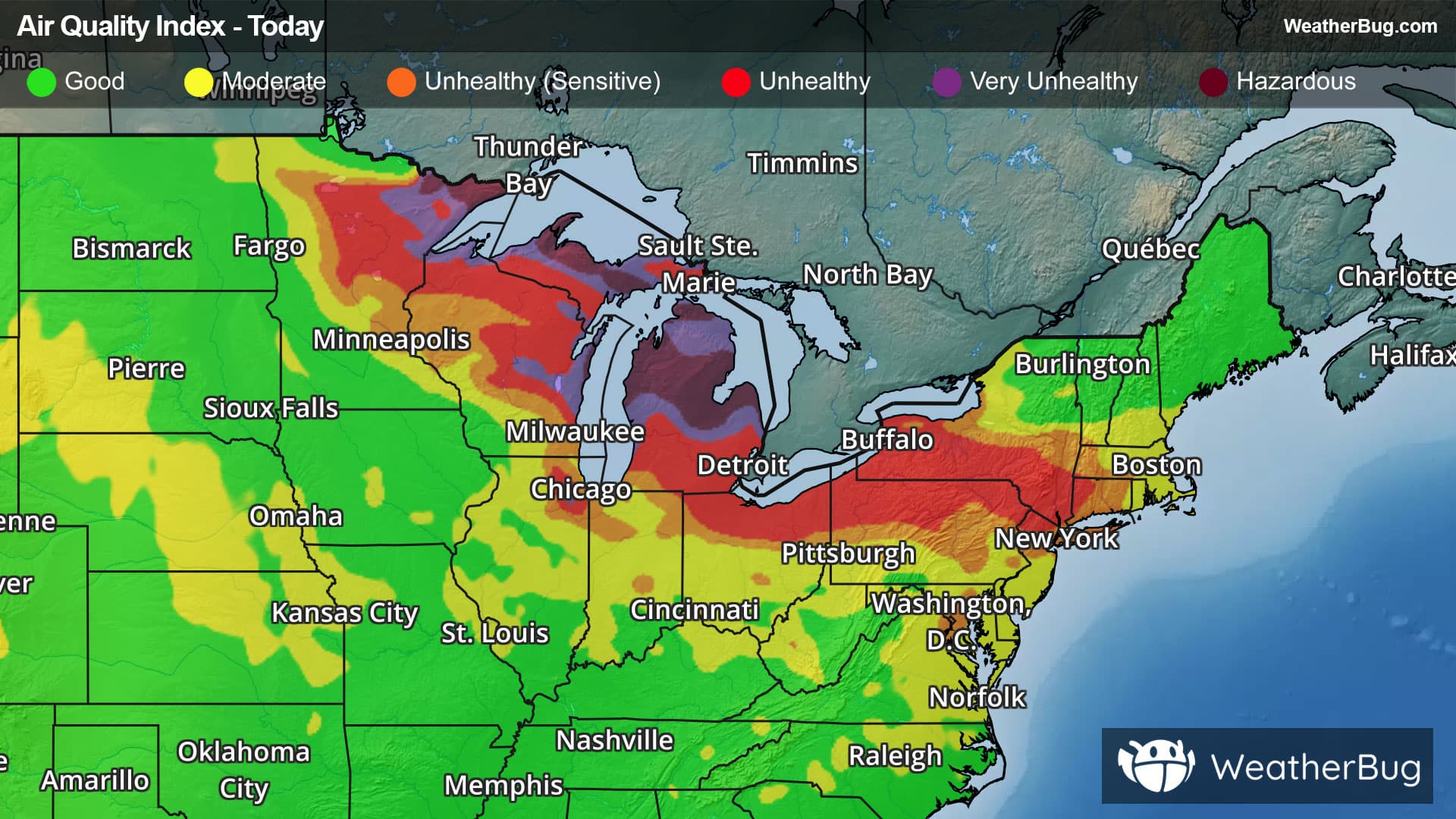
Smoke will billow from wildfires in Minnesota and multiple Canadian provinces to much of the East Coast in the coming days.
Multiple major wildfires have been scorching across Minnesota as well as the Canadian provinces of Manitoba and Ontario, only increasing in coverage beneath a high-pressure system that maintains hot and dry weather in the region.
Strong west-northwest winds high in the atmosphere north of a huge heat dome, centered over the Plains, will siphon copious amounts of smoke and particulate matter over the Great Lakes and much of the East Coast through at least the weekend. Subsiding air east of the heat dome and behind a cold front will pull the polluted air to the surface, where smothering impacts will be felt by tens of millions at times.
Air Quality Alerts are in place across a large portion of the country, from Minnesota east-southeast to southern New England and the Mid-Atlantic. This includes huge metropolitan areas such as Chicago, Detroit, Cleveland, Pittsburgh, New York City, Philadelphia, Baltimore, Washington D.C., and Boston.
In some locations, air quality could be poor enough that visibility is reduced and outdoor activities are discouraged or even cancelled. People with lung issues or lung-related diseases, such as asthma, COPD, influenza, pneumonia, tuberculosis, or lung cancer, could have a particularly tough time breathing in the particulate-filled air, expected to occur over this portion of the country.
Air quality levels will vary from Hazardous across portions of Minnesota and Michigan to Unhealthy further to the east and southeast across the rest of the Great Lakes, the northern Appalachians and portions of the I-95 corridor from Boston to Washington D.C.
A positive aspect of this otherwise dangerous phenomenon is that sunrises and sunsets will be particularly colorful as long as the smoke sticks around. Reds and oranges will be highlighted more than normal when the sun is low on the horizon.