Weather Alerts For Countryside, IL
Extreme Heat Warning
-# HEADLINE -------------------- EXTREME HEAT WARNING REMAINS IN EFFECT UNTIL MIDNIGHT CDT TONIGHT # DETAILS -------------------- WHAT Dangerously hot conditions with heat index values of 100 to 105 degrees. WHERE Central Cook, Northern Cook, and Southern Cook Counties. WHEN Until midnight CDT tonight. IMPACTS Heat related illnesses increase significantly during extreme heat and high humidity events. ISSUED AT Thursday, July 2, 2026 at 1:48 PM CDT ISSUED BY National Weather Service Chicago IL HEADER URGENT - WEATHER MESSAGE # PRECAUTIONARY/PREPAREDNESS ACTIONS -------------------- Take extra precautions when outside. Wear lightweight and loose fitting clothing. Try to limit strenuous activities to early morning or evening. Take action when you see symptoms of heat exhaustion and heat stroke. The magnitude of anticipated heat, combined with oppressive warmth at night will lead to hazardous conditions, particularly for the elderly and those with pre-existing health conditions. Residents of the city of Chicago can call 3 1 1 to request well being checks for elderly friends or family members, or for information on finding the nearest cooling center. Stay cool, stay hydrated, stay informed. Do not leave young children and pets in unattended vehicles. Car interiors will reach lethal temperatures in a matter of minutes. # AREAS AFFECTED -------------------- Central Cook, Northern Cook, Southern Cook Including the cities of La Grange, Des Plaines, Northbrook, Lemont, Chicago, Park Forest, Schaumburg, Evanston, Cicero, Calumet City, Palatine, Oak Park, Oak Forest, Oak Lawn, and Orland Park
Lightning Alert
-Closest strike: 5.32 miles Stay Alert! Remain in a safe area until there has been no lightning within 10 miles of this location for 30 minutes. Please be aware that lightning activity can remain high even when a storm is moving away from your location. Even if rain has stopped, do not leave your safe area until WeatherBug indicates that lightning is more than 10 miles away from this selected location. IF OUTDOORS Avoid water, high ground, and open spaces. Avoid all metal objects including electric wires, fences, and machinery. Find a safe area in a building or in a fully enclosed vehicle with the windows completely shut. Unsafe places include underneath canopies, small picnic or rain shelters, convertibles, or near trees. IF INDOORS Avoid water and stay away from doors and windows. Avoid using a hard line telephone. Take off headphones. Turn off, unplug, and stay away from appliances, computers, power tools, and TV sets. Lightning may strike exterior electric and phone lines, inducing shocks to inside equipment.
Severe Storm Risk
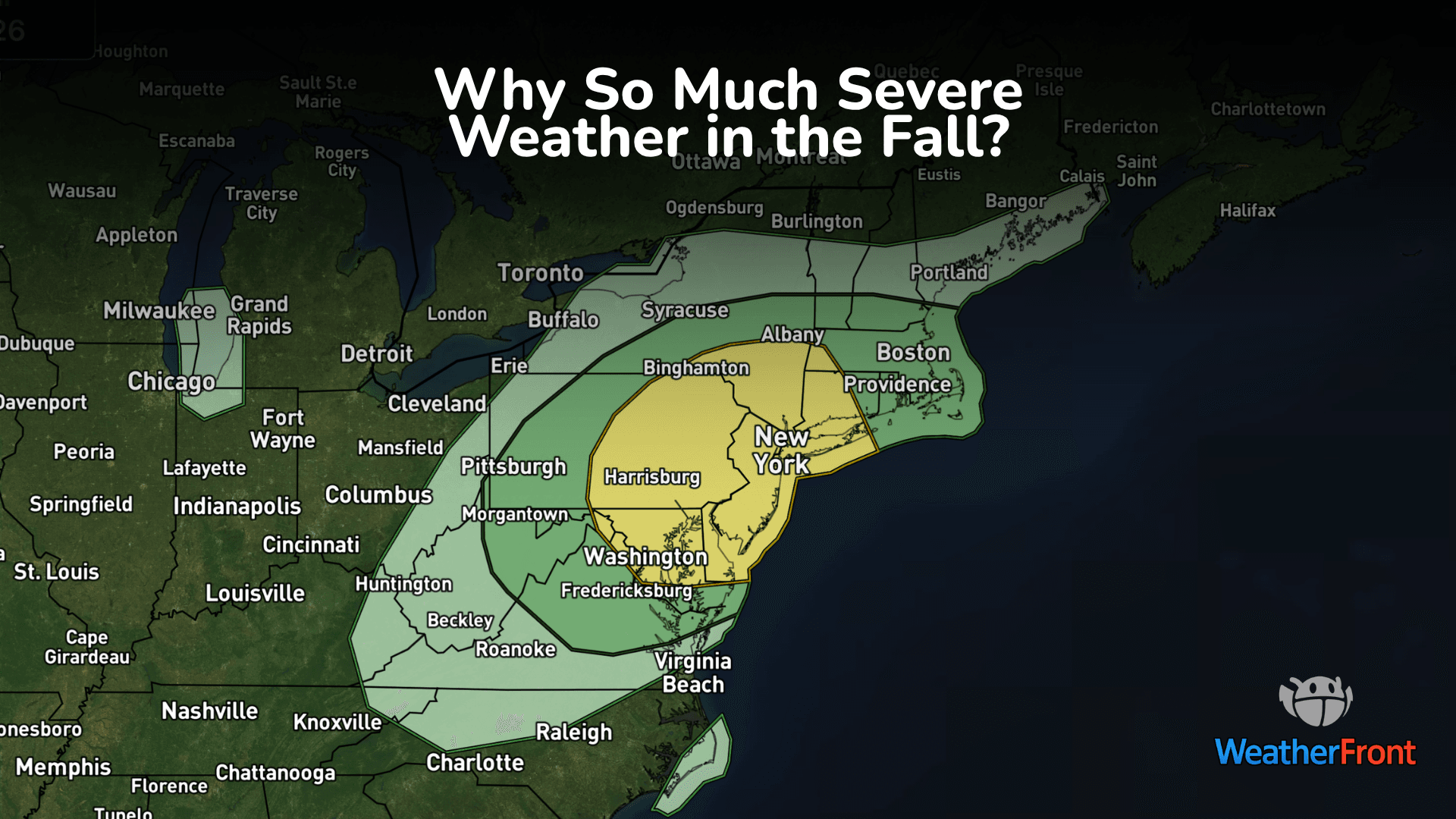
-There is a Marginal Severe Storm Risk for your location. Continue reading for today's outlook from the National Weather Service's Storm Prediction Center. -------------------- National Severe Storm Outlook THERE IS AN ENHANCED RISK OF SEVERE THUNDERSTORMS FOR PARTS OF EASTERN SOUTH DAKOTA INTO FAR SOUTHWEST MINNESOTA AND EXTREME NORTHWEST IOWA THERE IS A SLIGHT RISK OF SEVERE THUNDERSTORMS FOR PORTIONS OF THE NORTHERN HIGH PLAINS TO THE GREAT LAKES...WESTERN KANSAS...AND PARTS OF THE TENNESSEE VALLEY SUMMARY Scattered severe storms are still possible from the northern Plains into the Midwest and Great Lakes regions today into tonight, as well as across the southern Appalachians and Tennessee Valley this afternoon and early evening. 20Z Update Much of the previous forecast remains generally on track, especially for portions of the central High Plains, the TN Valley, and northern New England. However, appreciable uncertainty still exists regarding the potential for focused corridors of severe across much of the northern Plains into the Great Lakes. Relatively robust supercell evolution has occurred along mesoscale surface baroclinic boundaries, amid generally weak upper-level support, to support instances of 2-3 inch diameter hail over central/eastern SD, as well as instances of brief and modest rotation with storms over northeastern IA. Please see MCDs 1440-1441 for short-term details of convective evolution. However, these storms are moving roughly normal to boundary orientation, putting the duration of higher-end severe into question. At least for portions of the Upper Midwest though, there is a modest signal of an MCS traversing a baroclinic boundary along the WI/IL border for multiple hours. A locally greater concentration of damaging gusts could accompany this activity through the afternoon, though confidence in this scenario is not overly high either. Many of the ongoing storms (especially over SD) are occurring over portions of the open warm sector relatively early in the diurnal heating cycle, casting uncertainty regarding the impacts the ongoing storms will have on later afternoon initiation and evolution along other mesoscale boundaries. As such, prudence was exercised in favor of making only minor changes to the outlook to reflect the latest guidance consensus.