Weather Alerts For East Quogue, NY
Coastal Flood Statement
-# HEADLINE -------------------- HIGH RIP CURRENT RISK REMAINS IN EFFECT THROUGH THIS EVENING COASTAL FLOOD STATEMENT REMAINS IN EFFECT THIS EVENING # DETAILS -------------------- WHAT For the High Rip Current Risk, dangerous rip currents expected. For the Coastal Flood Statement, up to one half foot of inundation above ground level expected in vulnerable areas near the waterfront and shoreline. WHERE Southeast Suffolk County. WHEN For the High Rip Current Risk, through this evening. For the Coastal Flood Statement, this evening. IMPACTS Brief minor flooding of the more vulnerable locations near the waterfront and shoreline. Life-threatening rip currents are likely for all people entering the surf zone. Anyone visiting the beaches should stay out of the surf. Rip currents can sweep even the best swimmers away from shore into deeper water. ISSUED AT Sunday, June 14, 2026 at 3:18 AM EDT ISSUED BY National Weather Service New York NY HEADER Coastal Hazard Message # PRECAUTIONARY/PREPAREDNESS ACTIONS -------------------- Do not drive through flooded roadways. If you enter the surf zone, always have a flotation device with you and swim near a lifeguard. If caught in a rip current, relax and float, and do not swim against the current. If able, swim in a direction following the shoreline. If unable to escape, face the shore and yell or wave for help. # AREAS AFFECTED -------------------- Southeast Suffolk
Rip Current Statement
-# HEADLINE -------------------- HIGH RIP CURRENT RISK REMAINS IN EFFECT THROUGH THIS EVENING COASTAL FLOOD STATEMENT REMAINS IN EFFECT THIS EVENING # DETAILS -------------------- WHAT For the High Rip Current Risk, dangerous rip currents expected. For the Coastal Flood Statement, up to one half foot of inundation above ground level expected in vulnerable areas near the waterfront and shoreline. WHERE Southeast Suffolk County. WHEN For the High Rip Current Risk, through this evening. For the Coastal Flood Statement, this evening. IMPACTS Brief minor flooding of the more vulnerable locations near the waterfront and shoreline. Life-threatening rip currents are likely for all people entering the surf zone. Anyone visiting the beaches should stay out of the surf. Rip currents can sweep even the best swimmers away from shore into deeper water. ISSUED AT Sunday, June 14, 2026 at 3:18 AM EDT ISSUED BY National Weather Service New York NY HEADER Coastal Hazard Message # PRECAUTIONARY/PREPAREDNESS ACTIONS -------------------- Do not drive through flooded roadways. If you enter the surf zone, always have a flotation device with you and swim near a lifeguard. If caught in a rip current, relax and float, and do not swim against the current. If able, swim in a direction following the shoreline. If unable to escape, face the shore and yell or wave for help. # AREAS AFFECTED -------------------- Southeast Suffolk
Severe Storm Risk
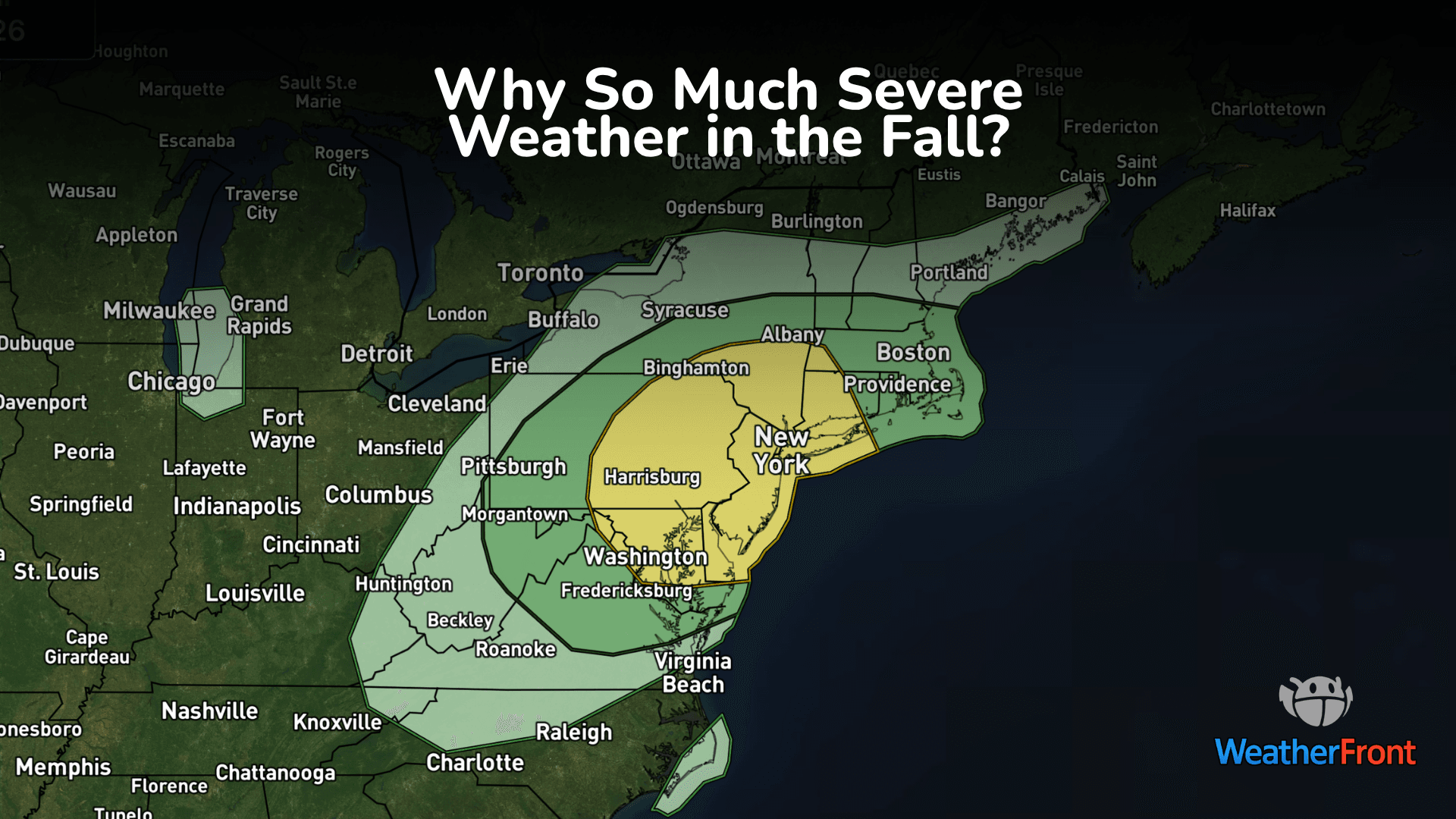
-There is a Marginal Severe Storm Risk for your location. Continue reading for today's outlook from the National Weather Service's Storm Prediction Center. -------------------- National Severe Storm Outlook THERE IS A SLIGHT RISK OF SEVERE THUNDERSTORMS FROM THE MIDDLE OHIO VALLEY INTO THE NORTHEAST...AND FROM THE APPALACHIANS INTO THE MID-ATLANTIC STATES SUMMARY Scattered severe thunderstorms capable of damaging wind gusts and some hail are expected this afternoon and evening from the Upper Ohio River Valley into the Northeast, and from the Appalachians into the Mid-Atlantic States. Mid/Upper Ohio Valley to the Northeast/New England Morning surface analysis places a low over southeastern Lower MI, along an extensive cold front that arcs from northwestern Ontario south-southwestward into southern IL and then more southwestward through southern MO and central OK into the TX Permian Basin. This cold front and attendant low are forecast to progress eastward today, moving just ahead of a shortwave trough pivoting within the base of a larger upper trough from the OH Valley through the Northeast. Moderate to strong mid-level flow will accompany this shortwave, with mesoanalysis currently estimating 60 kt at 500 mb within the base of this shortwave over the IA/MO border. Moderate low-level moisture is already in place ahead of this shortwave trough and associated cold front across the OH Valley, with upper 60s dewpoints currently observed over much of IN and OH. Low-level moisture decreases with northeastward extent, with low 60s dewpoints in place across much of PA and western NY, decreasing to the upper 50s across much of New England. Filtered daytime heating will contribute to airmass destabilization ahead of the cold front, with temperatures in the 80s and dewpoints in the mid 60s resulting in moderate buoyancy (i.e. MLCAPE around 800-1000 J/kg) across the Middle to Upper OH Valley. Modest height falls and ascent along the front will support thunderstorms within this moderately buoyant environment. Around 40 kt effective shear could support a few initial/semi-discrete supercells prior to more prevalent upscale-growing linear modes, with the primary concern being damaging wind gusts, particularly in the OH/PA border vicinity where the best overlap of better buoyancy and shear exists. A brief tornado and/or hail could also occur given the relative strength of the wind profiles. Cooler temperatures and lower dewpoints will lead to more limited buoyancy farther northeast (i.e. from western NY into New England). However, the airmass is still expected to destabilize, supporting afternoon/evening thunderstorms along and ahead of the front. Effective shear around 35 to 40 kt should be sufficient for occasional organization and some stronger bowing segments. Mid-Atlantic to TN/southern Appalachians/Carolinas Thunderstorm development is anticipated along the modest lee troughing expected to extend across the region this afternoon and evening. This development is forecast to occur well ahead of the cold front mentioned in the previous subsection, resulting in a separate area of strong to severe thunderstorm potential from the Carolinas into the Mid-Atlantic. Dewpoints across the region currently range from the upper 60s across the central MD and VA to the low 70s across the central Carolinas. Heating of this airmass will result in moderate to strong surface-based buoyancy. Shear will be weaker than areas farther north but still sufficient for organized clusters and/or perhaps a few supercells. Primary risk will be damaging gusts, with this potential maximized from eastern PA and NJ southward through the VA Tidewater region. Also worth noting is the trend within the recent guidance for a modestly organized convective line to progress from Middle TN/northern AL through northern GA. This line appears to result from upscale growth of a relatively higher concentration of multicells initially over the western TN vicinity near a weak surface low. Consistency within the guidance is high enough to extend 15% wind probability back into middle TN/northern AL to cover this threat. Southern Rockies into the Southern High Plains Afternoon thunderstorm development is anticipated across central NM amid persistent westerly flow aloft and modest mid-level moisture. Deep-layer shear is strong enough to support a few organized updrafts capable of hail with any of the early, more cellular development. Thereafter, a trend towards a more outflow-dominant, linear structure is anticipated, and a few damaging gusts are possible with any stronger bowing segments.