Weather Alerts For Kingsville, MD
Extreme Heat Warning
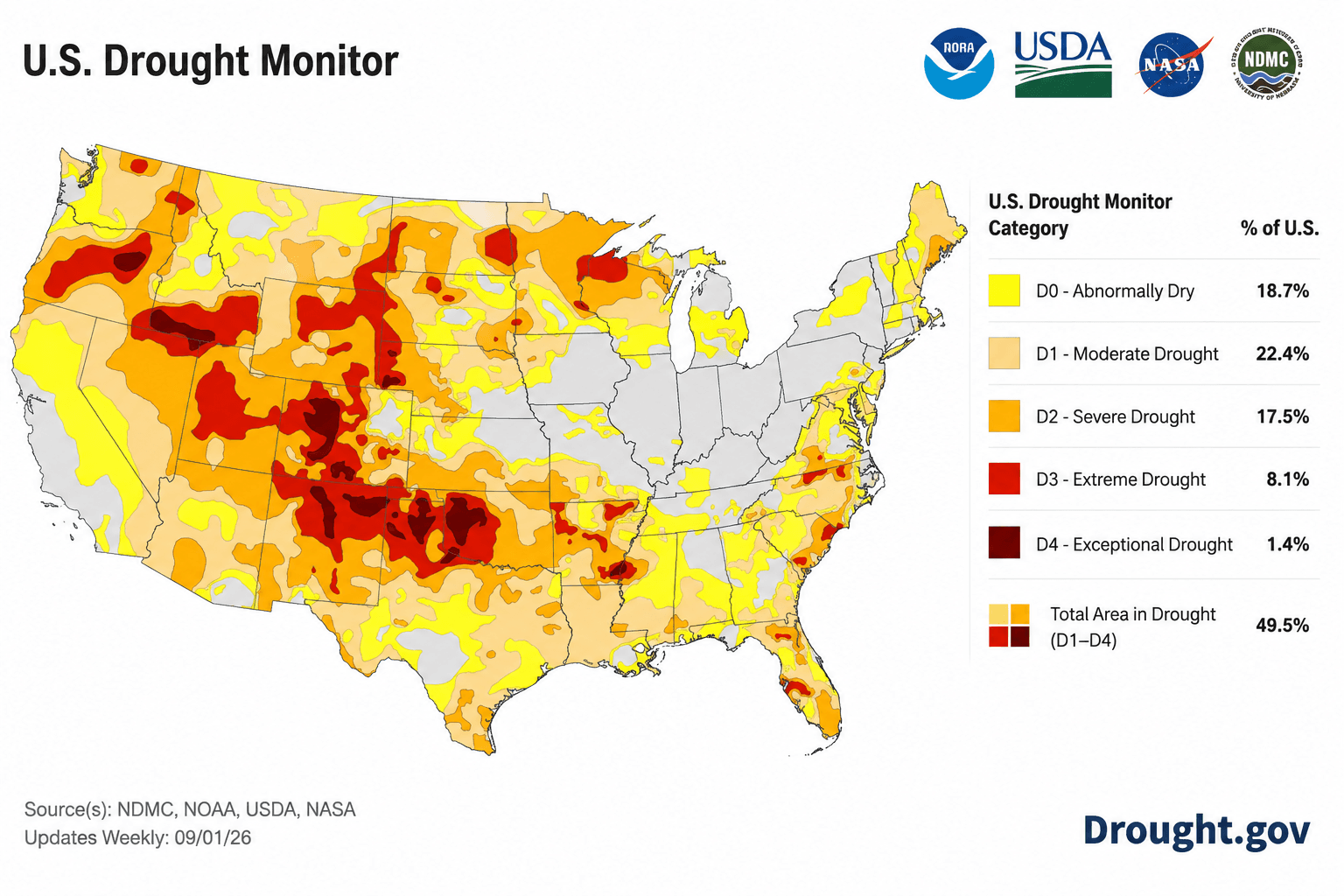
-# HEADLINE -------------------- EXTREME HEAT WARNING REMAINS IN EFFECT UNTIL 9 PM EDT THIS EVENING # DETAILS -------------------- WHAT Dangerously hot conditions with heat index values of 110 to 115. WHERE Washington DC, and portions of central, north central, northeast, northern, and southern Maryland, and central, northern, and northwest Virginia. WHEN Until 9 PM EDT this evening. IMPACTS Heat related illnesses increase significantly during extreme heat and high humidity events. ADDITIONAL DETAILS Prolonged excessive heat may impact power, water, and transportation systems. Heat index values around 100 to 105 are possible again Sunday afternoon. ISSUED AT Saturday, July 4, 2026 at 9:07 AM EDT ISSUED BY National Weather Service Baltimore MD/Washington DC HEADER URGENT - WEATHER MESSAGE # PRECAUTIONARY/PREPAREDNESS ACTIONS -------------------- Drink plenty of fluids, stay in an air-conditioned room, stay out of the sun, and check up on relatives and neighbors. Do not leave young children and pets in unattended vehicles. Car interiors will reach lethal temperatures in a matter of minutes. Take extra precautions when outside. Wear lightweight and loose fitting clothing. Try to limit strenuous activities to early morning or evening. Take action when you see symptoms of heat exhaustion and heat stroke. # AREAS AFFECTED -------------------- Calvert, Central and Southeast Prince William/Manassas/Manassas Park, Northwest Howard, Orange, Southeast Harford, Southern Baltimore, Stafford, Albemarle, Anne Arundel, Arlington/Falls Church/Alexandria, Carroll, Cecil, Central and Southeast Howard, Central and Southeast Montgomery, Charles, Culpeper, District of Columbia, Eastern Loudoun, Fairfax, Frederick, Greene, King George, Madison, Nelson, Northern Baltimore, Northern Fauquier, Northwest Harford, Northwest Montgomery, Northwest Prince William, Prince Georges, Rappahannock, Southern Fauquier, Spotsylvania, St. Marys, Western Loudoun
Air Quality Alert
-# HEADLINE -------------------- AIR QUALITY ALERT IS IN EFFECT FOR SATURDAY JULY 4 2026 # SUMMARY -------------------- The Maryland Department of the Environment has issued a Code ORANGE Air Quality Alert Saturday for the Baltimore City Metro and Annapolis region. A Code Orange Air Quality Alert means that air pollution concentrations within the region may become unhealthy for sensitive groups. Sensitive groups include children, people suffering from asthma, heart disease or other lung diseases and the elderly. The effects of air pollution can be minimized by avoiding strenuous activity or exercise outdoors. For more information on ground-level ozone and fine particles visit the web site mde.maryland.gov/programs/air/AirQualityMonitoring/Pages/index.aspx # DETAILS -------------------- ISSUED AT Friday, July 3, 2026 at 4:40 PM EDT ISSUED BY Relayed by National Weather Service Baltimore MD/Washington DC HEADER Air Quality Alert Message | MD Dept of Environment and VA Dept of Environmental Quality # AREAS AFFECTED -------------------- Anne Arundel, Southern Baltimore
Severe Storm Risk
-There is a Enhanced Severe Storm Risk for your location. Continue reading for today's outlook from the National Weather Service's Storm Prediction Center. -------------------- National Severe Storm Outlook THERE IS AN ENHANCED RISK OF SEVERE THUNDERSTORMS ACROSS PORTIONS OF THE MID-ATLANTIC AS WELL AS ACROSS PORTIONS OF SOUTHERN KANSAS AND NORTHERN OKLAHOMA SUMMARY Clusters of storms will move across parts of the Allegheny Plateau into the Mid-Atlantic, with potential for widespread damaging wind gusts. Additional severe thunderstorms are expected across the Great Plains this afternoon and evening, posing a risk for severe wind gusts and large hail. Upper OH Valley into the Mid-Atlantic/southern New England A belt of moderate mid-level westerly flow aloft currently extends across the OH Valley and Mid-Atlantic States, situated between the upper troughing over eastern Canada and higher heights over the southeast CONUS. A modest vorticity maximum appears to be moving within these westerlies across Lower MI, downstream of two more prominent, convectively augmented vorticity maxima across IA and KS. There also appears to be a very modest shortwave trough moving over the KY vicinity, evidenced by a subtle shift in the mid-level winds across the region. Both of these features are expected to continue eastward today, progressing into a very warm, moist, and unstable airmass across the Upper OH Valley and Mid-Atlantic by the early afternoon. Interaction between the modest ascent associated with these features and the unstable airmass forecast to be in place will support thunderstorm development. This development is expected first over the Blue Ridge Mountains/Shenandoah Valley vicinity during the early afternoon (likely supported by the modest KY shortwave trough) before then progressing northeastward through northern VA, DC, central MD, DE, and southern NJ. Weak deep-layer shear amid a deeply mixed airmass (with afternoon temperatures in the upper 90s/low 100s) will support outflow-dominant storm structures, and strong cold pools capable of widespread damaging wind gusts. An isolated gust or two around 70-75 mph is possible. A similar convective evolution is anticipated farther north (from the Allegheny Plateau through the northern Mid-Atlantic and southern New England) later in the afternoon as the Lower MI vorticity maximum moves through the region. Damaging gusts will be the primary risk here as well, with slightly less coverage and magnitude than farther south. Central/Southern Plains Outflow associated with a decaying convective cluster over western/central KS currently arcs from southeast CO across far southwest KS into central KS. This cluster is forecast to continue weakening as it gradually moves east-southeastward, with its associated outflow likely extending from east-central KS back southwestward across south-central KS by this afternoon. Airmass destabilization is expected by the mid to late afternoon amid strong heating, steep mid-level lapse rates, and ample low-level moisture. Moisture convergence along this boundary within this convectively uninhibited airmass will result in additional thunderstorms. Given the strong buoyancy and moderate deep-layer vertical shear in place, a few supercells are possible early in the convective cycle. Large to isolated very large hail as well as strong downbursts are possible with any supercells. A tornado or two could also occur, particularly with sufficient residence time along the boundary. Outflow-dominant storm structures will likely result in one or more forward-propagating convective clusters throughout the evening. Widely scattered thunderstorm development is anticipated within the moist upslope flow over the central High Plains, with at least some potential for the development of a convective line that then progresses into western NE, northeastern CO, and northwestern KS. Widely scattered thunderstorm development is also expected along the dryline extending from the central/western OK Panhandle southwestward across the TX Panhandle and into far east-central NM. Weak vertical shear will likely prevent sustained updraft organization, but a few storms could briefly be robust enough to produce strong updrafts/downdrafts and resulting damaging gusts. Lower MO Valley into the Lower/Central OH Valley Scattered to numerous thunderstorms are expected this afternoon as a pair of vorticity maxima, one associated with the convection over KS and the other from overnight storms across IA, progress eastward into the moist and diurnally destabilized airmass over the region. Vertical shear across the region will be modest, limiting updraft organization and promoting an outflow-dominant storm mode. Even so, some cold pool amalgamation is possible, with the resultant forward-propagating clusters capable of damaging gusts.