Weather Alerts For West Allis, WI
Special Weather Statement
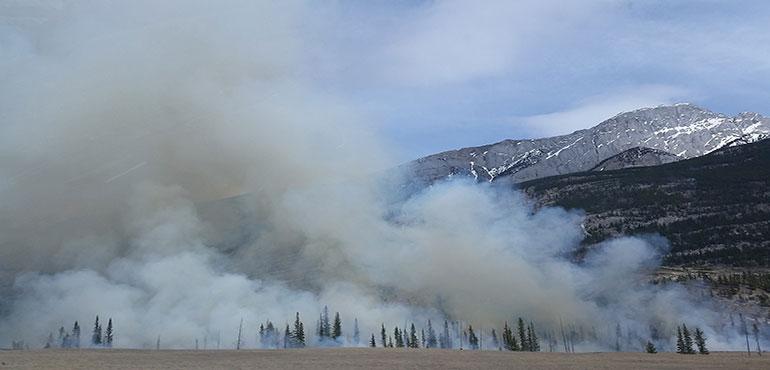
-# HEADLINE -------------------- ELEVATED FIRE WEATHER CONDITIONS TODAY # SUMMARY -------------------- Warm, dry and breezy conditions today will lead to an elevated concern for fire weather across southern WI. Given recent rains and green up largely being complete, it is not thought that fuels are at a near critical level but the weather conditions are. Highs in the upper 70s, relative humidities falling to the 20-30 percent range and sustained winds around 15-20 mph with gusts to 35 mph all contribute to the increased fire weather concerns. # DETAILS -------------------- ISSUED AT Monday, May 4, 2026 at 1:33 AM CDT ISSUED BY National Weather Service MILWAUKEE/SULLIVAN WI HEADER SPECIAL WEATHER STATEMENT # AREAS AFFECTED -------------------- Lafayette, Washington, Columbia, Dane, Dodge, Fond du Lac, Green, Green Lake, Iowa, Jefferson, Kenosha, Marquette, Milwaukee, Ozaukee, Racine, Rock, Sauk, Sheboygan, Walworth, Waukesha Including the cities of Montello, Westfield, Oxford, Neshkoro, Endeavor, Berlin, Princeton, Markesan, Fond Du Lac, Plymouth, Sheboygan Falls, Howards Grove, Oostburg, Baraboo, Reedsburg, Prairie Du Sac, Sauk City, Portage, Columbus, Lake Wisconsin, Lodi, Beaver Dam, Waupun, Mayville, West Bend, Germantown, Hartford, Mequon, Cedarburg, Grafton, Dodgeville, Mineral Point, Barneveld, Madison, Watertown, Fort Atkinson, Jefferson, Waukesha, Brookfield, New Berlin, Menomonee Falls, Muskego, Milwaukee, Darlington, Shullsburg, Benton, Belmont, Argyle, Blanchardville, Monroe, Brodhead, Janesville, Beloit, Whitewater, Delavan, Elkhorn, Lake Geneva, East Troy, Racine, and Kenosha
Severe Storm Risk
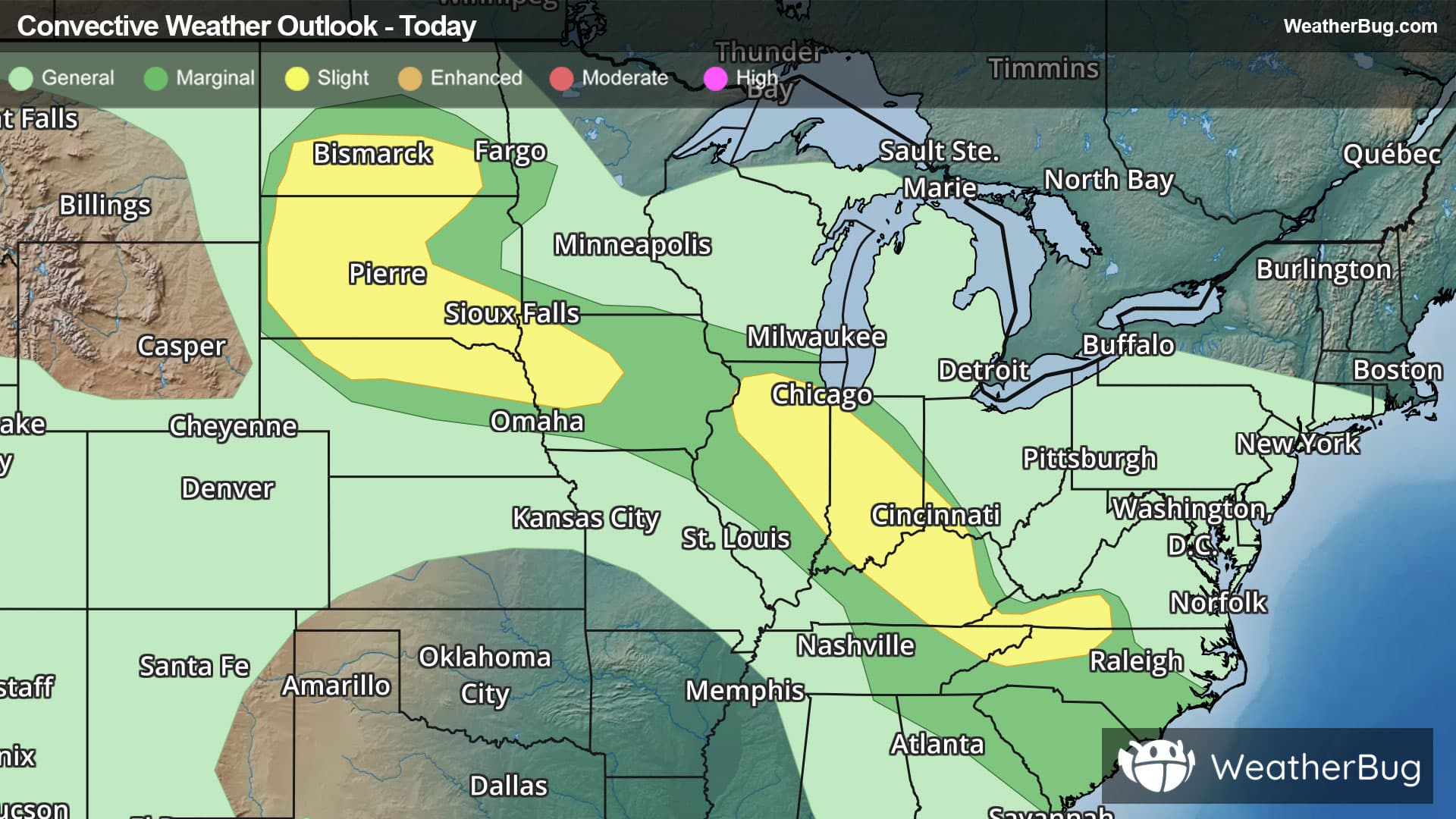
-There is a Marginal Severe Storm Risk for your location. Continue reading for today's outlook from the National Weather Service's Storm Prediction Center. -------------------- National Severe Storm Outlook THERE IS A SLIGHT RISK OF SEVERE THUNDERSTORMS FROM NORTHEAST KANSAS ACROSS NORTHERN/CENTRAL MISSOURI INTO WEST-CENTRAL ILLINOIS SUMMARY Strong to severe thunderstorms capable of large hail and damaging wind are possible across portions of the Midwest this afternoon into tonight. A conditional threat for severe storms with large to very large hail extends into portions of the central/southern Plains. Synopsis Early-morning satellite imagery shows a large upper low off the central CA coast, with an extensive fetch of southwesterly flow aloft from the base of this low through northern Mexico and the Southwest States into the southern High Plains. A deep cyclone exists over central Canada as well. Between these two primary features, a low-amplitude shortwave trough is currently moving southeastward across NE. Several shortwave troughs are forecast to rotate around the Canadian cyclone, contributing to some deepening and eastward progression. An associated surface low, currently over northwestern Ontario, will move eastward as well. The deepening of the upper trough across the northern Plains and progression of the surface low will force a cold front southward/southeastward across the Upper Midwest and Middle MO Valley by this evening, and through the central Plains, and Lower MO and Mid MS Valleys by early tomorrow. Increasing low-level moisture is anticipated ahead of this cold front, supporting the potential for thunderstorms as this front interacts with this moisture and associated buoyancy. Eastern KS into Mid MS Valley and Lower MI Thunderstorm development is anticipated during the afternoon, both along the front, which should extend through southern WI and eastern/southern IA, and within the warm-air advection regime ahead of the front. Thunderstorms along the front will initially be displaced north of the better shear and buoyancy, so somewhat transient updraft structures and/or frontal undercutting will likely limit storm severity. Even so, high cloud bases and a deeply mixed boundary layer could result in a few strong gusts. Later in the evening, more storm development appears likely on the front as it moves into eastern KS and northern/central MO. Here, stronger shear and buoyancy should support more robust updrafts and a relatively higher probability for severe storms. Large hail is the primary risk. Any thunderstorms that develop within the warm-air advection regime ahead of the front during the afternoon and early evening should interact with greater buoyancy (particularly from northeast IL, northern IL and southern Lower MI where less boundary-layer mixing could result in slightly higher dewpoints) and moderate vertical shear. A few stronger, more organized storms are possible in this area, although weaker upper flow could limit discreteness and result in a trend towards a more clustered storm mode. Central Kansas into Oklahoma and northern Texas A sharp dryline is expected to develop from central KS south-southwestward into northwest TX. Given the veering surface winds, convergence along the dryline will likely be modest throughout much of the afternoon. However, some backing is possible during the evening as a surface low moves eastward across southwest KS towards northwest OK. Strong diurnal heating will likely erode most convective inhibition by the early evening, while steep lapse rates contribute to moderate buoyancy. These factors could be enough to force isolated initiation on the dryline from central KS into northwest TX. Upper-level flow will be strengthening across the region throughout the period, and any storms that do form will have ample deep-layer shear to support supercells. Large to very large hail would be the primary risk early in the convective cycle, with dry mid-levels also supporting strong downdrafts as storms begin to weaken and collapse.
Pollen Alert
-Pollen Index: 9.8 Pollen Level: high Predominant Pollen: Maple, Oak and Ash. Concentration of pollen grains in the air for Tuesday will be unchanged in the high range. Constant and seasonally normal weather conditions tend to stabilize pollen concentrations in the outdoor air.